
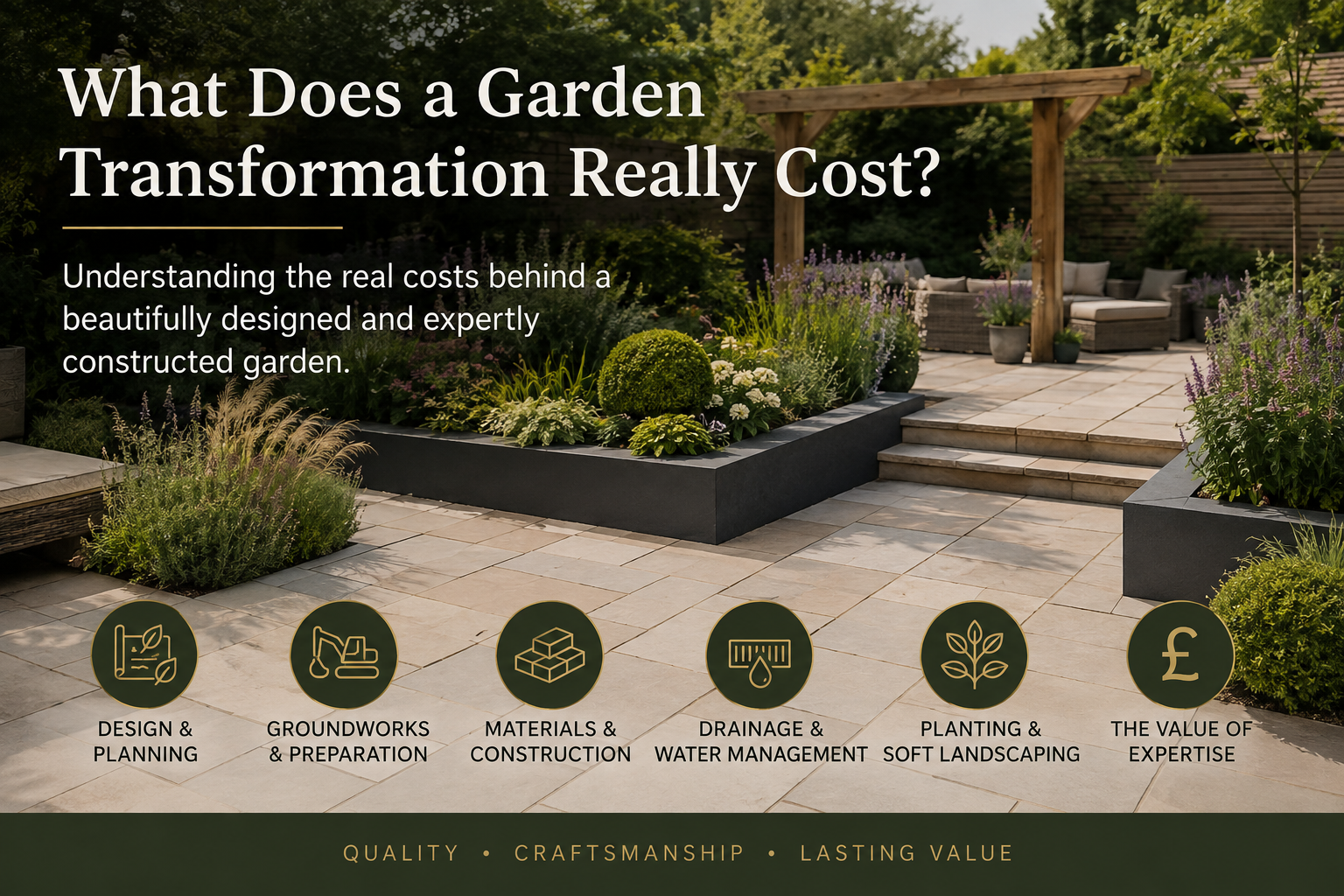
What Does a Garden Transformation Really Cost?
What Does a Garden Transformation Really Cost?
One of the questions we are asked most often at Tracey-Anne Gardens is: “How much will it cost to landscape my garden?”
It sounds like a straightforward question, but there is rarely a straightforward answer.
No two gardens are the same. Access, levels, drainage, ground conditions, materials and the complexity of the design can make two gardens of a similar size completely different projects.
A professionally landscaped garden is also much more than the paving, lawn and planting you see when the project is finished. Much of the cost — and much of the skill — is hidden underneath.
Here are some of the principal costs involved in creating a complete garden transformation.
Design and Planning
A successful garden starts long before the first spade goes into the ground.
We consider how the garden will be used, where people will sit and move through the space, the relationship between the house and garden, sunlight, existing levels, views, privacy, planting and drainage.
Good design can also prevent expensive mistakes during construction.
Site Preparation and Groundworks
This is often one of the least appreciated parts of landscaping because much of the work eventually disappears underground.
Existing patios, lawns, concrete, old paths, sheds, planting and other materials may have to be removed before construction can begin.
The ground then needs to be excavated and prepared to the correct levels.
A garden that looks relatively simple before work starts can involve moving many tonnes of soil, stone and waste.
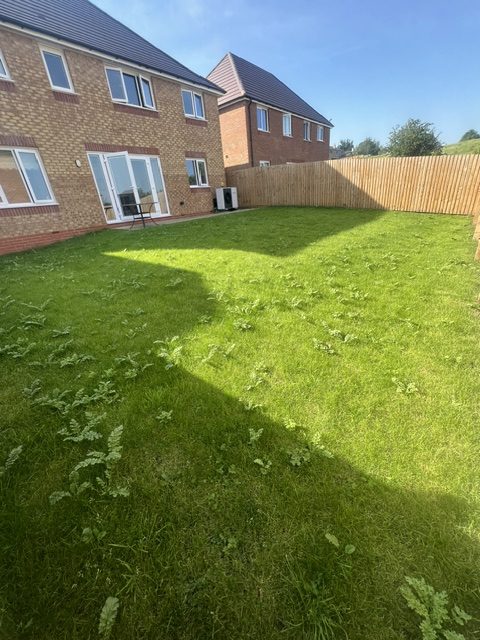
A project in Billington prior to the groundworks
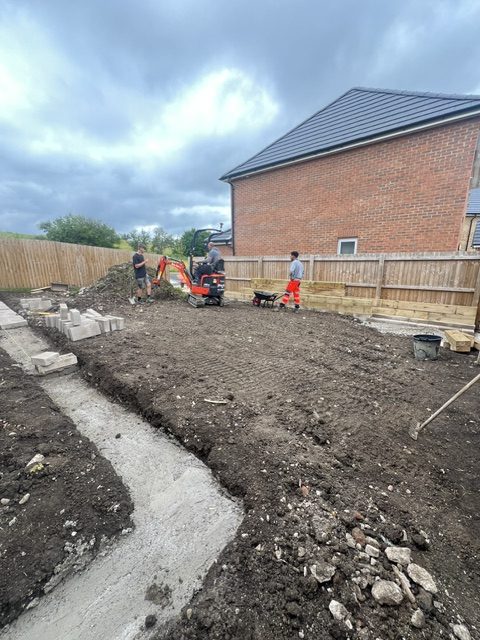
Groundworks in progress in Billington
3. Access
Access can have a surprisingly large effect on cost.
If a mini digger can reach the garden, excavation and movement of materials can be considerably quicker than on a property where everything has to be transported by wheelbarrow.
Narrow gateways, steps, terraced properties and gardens with no direct rear access all affect the amount of labour involved.
4. Levels and Excavation
Creating attractive, usable spaces often means changing existing ground levels.
A sloping garden may require terracing, retaining walls or steps. Even apparently level gardens need carefully established finished heights so patios, lawns, paths and planting areas connect correctly.
Levels also have to work with doors, existing buildings, boundaries and drainage.
This is skilled work and getting it wrong at the beginning can cause problems throughout the project.
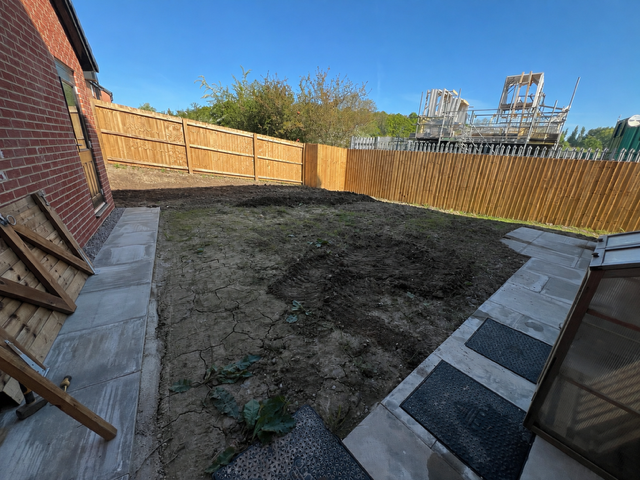
A sloping garden on a new-build property in Clitheroe.
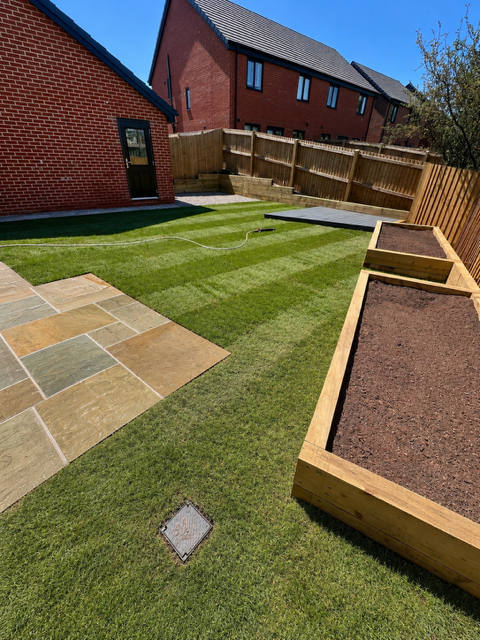
Staggered timber sleepers have been built to retain the sloping ground
5. Drainage
Water has to go somewhere, and managing it correctly is an essential part of any professionally landscaped garden.
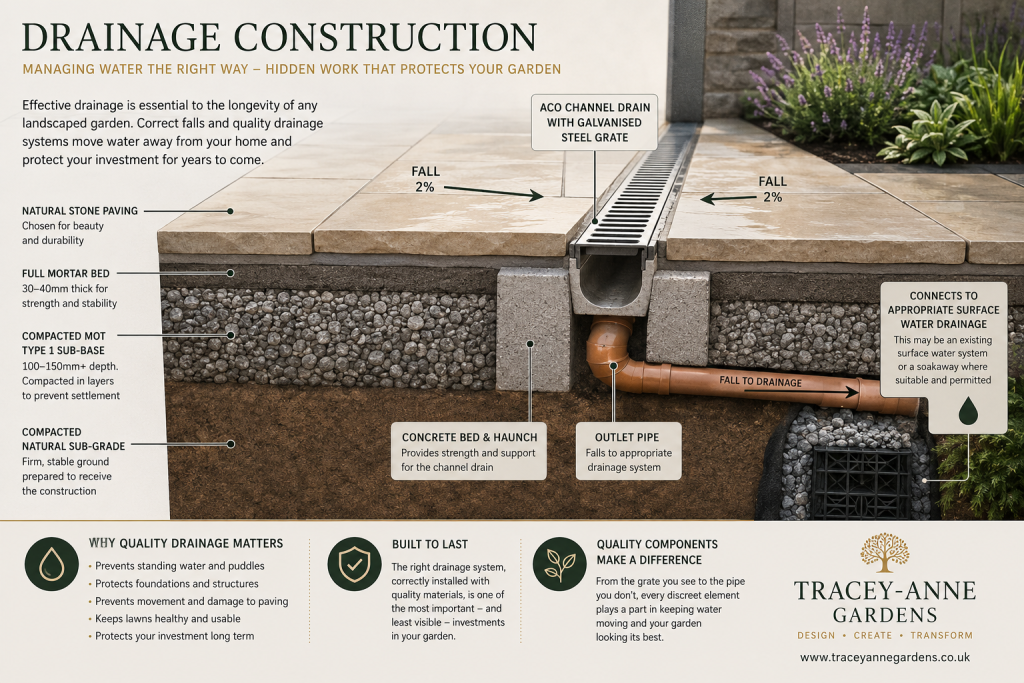
At its simplest, drainage begins with establishing the correct levels and falls so that rainwater naturally moves away from buildings and does not collect on patios or paths. On more challenging sites, however, additional drainage systems may be required, and these can add significantly to the cost of a project.
Channel drains, often referred to as ACO drains, are commonly installed alongside patios, thresholds, walls and other areas where surface water needs to be intercepted. The cost can vary considerably depending on the specification. An inexpensive plastic channel and grate is very different from a higher-quality system with a galvanised or stainless-steel grate, greater load capacity and a more refined finish.
Installing the channel itself is only part of the work. The ground must be excavated, the drain set accurately to the correct level and fall, and it will normally require a suitable concrete bed and support to keep it secure. Paving may also need to be carefully cut and finished around the channel.
Most importantly, the water collected by a drain needs somewhere appropriate to go.
Depending on the property and site conditions, this might involve installing underground drainage pipework and connecting into an appropriate existing surface-water drainage system, creating a soakaway where ground conditions and regulations allow, or designing another suitable means of managing water within the garden. It should never simply be assumed that a convenient household drain is suitable for surface-water discharge.
Other gardens may require land drains or French drains, particularly where water collects in lawns, planting areas or against retaining structures. These involve further excavation, perforated drainage pipe, appropriate aggregate and geotextile membranes before the area is reinstated.
Drainage costs can therefore include:
- Channel drainage and the quality of the chosen grating and system
- Excavation and removal of spoil
- Concrete bedding and support
- Underground drainage pipework and fittings
- Cutting and detailing paving around drainage channels
- Land drains, drainage aggregate and membranes
- Soakaway construction where appropriate
- Locating and connecting to an appropriate existing drainage system
- Additional labour required to establish accurate levels and falls
Like the sub-base beneath a patio, much of this expenditure ultimately disappears underground.
Drainage may not be something you immediately notice when looking at a beautifully finished garden — but inadequate drainage can result in standing water, saturated lawns, staining, movement and damage to hard landscaping.
It is another example of why two landscaping quotations that appear to offer the same finished garden can have very different costs: what has been designed and constructed underneath can be just as important as what you can see above it.
6. Paving Materials
The choice of paving can make a substantial difference to the overall project cost, not only in terms of the material itself but also the labour required to install it.
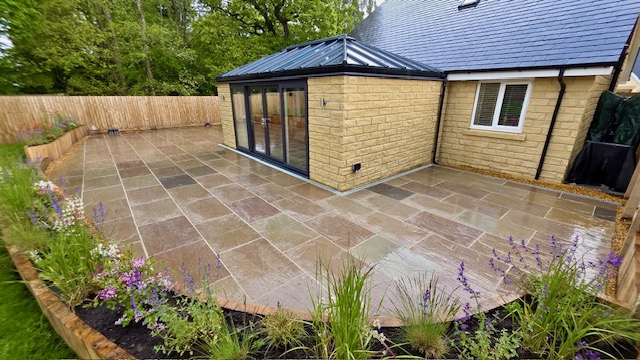
Indian sandstone is often one of the more cost-effective natural stone options, typically sitting below limestone in price per square metre, while still offering the character and variation of a natural product. Limestone generally commands a higher material cost due to its more refined finish and tighter grading, and porcelain is usually the most expensive of the three, both in material terms and in the additional labour required for cutting, handling and installation.
Labour costs can vary just as significantly as material costs. Sandstone and limestone are generally more straightforward to work with, whereas porcelain often requires specialist tools, more precise preparation, and additional time for cutting and laying, all of which can increase installation costs.
Within each category there are also significant differences in price, quality, size and finish.
The important thing is choosing a material appropriate for the property, the design and the client's priorities rather than simply selecting paving on price.
7. Cutting, Edging and Detailing
The finer details can completely change the appearance of a patio.
At Tracey-Anne Gardens we specialise in curved designs, and features such as curved steps, recessed drain covers, borders, contrasting setts and intricate cuts which all take additional time to plan and install.
Many standard, straight-edged patios will typically require less labour than more intricate designs that incorporate curves, feature steps and detailed edging.
While these elements do take more time to achieve, they are often what transform paving from a purely functional surface into a far more appealing and integral part of the garden design.
8. Jointing and Finishing Materials
Jointing compound is another cost that can easily be overlooked.
Standard resin-based jointing compounds are generally the most affordable option, making them attractive for keeping upfront project costs down. However, epoxy resin-based compounds typically come at a higher price point due to their increased strength, durability and resistance to movement, staining and weathering. While this means a greater initial investment—especially across a large patio where several tubs may be required—the long-term performance can make them more cost-effective, as the pointing is likely to last significantly longer and require less maintenance or repair over time.
Primers, sealers and specialist cleaning or finishing products may also be required depending upon the paving specification.
They represent a relatively small part of the finished garden visually, but they are an important part of completing paving correctly.
Advice from Tracey-Anne Gardens: Always ask your landscaper which jointing compound is included in their quote.
9. Walls, Steps, Fencing and Structures
Most complete transformations involve much more than paving.
Retaining walls, raised beds, bespoke steps, fencing, pergolas, screens, decking and other structures all require their own foundations, materials, fixings and skilled construction.
A sloping garden in particular can require significant structural work simply to create the level spaces shown on the finished design.
10. Planting and Soft Landscaping
Plants vary enormously in price.
A young shrub in a small pot may cost relatively little, while mature specimen trees, pleached trees, established hedging and large architectural plants can represent a significant investment.
Soil preparation, compost, topsoil, mulch and the labour involved in setting out and planting the scheme must also be considered.
Good planting isn't simply about filling spaces. We design planting so that colour, texture, height and seasonal interest work together as the garden matures.
11. The Hidden Materials
There is an extraordinary amount of material in a landscaped garden that the client may never see.
Cement, sand, MOT Type 1, concrete, reinforcement, drainage components, fixings, membranes, timber treatment, adhesives, primers and numerous other construction products disappear beneath or behind the finished surfaces.
Individually some may seem insignificant. Across an entire garden transformation they become a substantial part of the project.
12. Skilled Workmanship
Finally, there are the people creating the garden.
Professional landscaping involves far more than physical labour. Experienced landscapers constantly make decisions about levels, drainage, falls, cuts, construction methods, tolerances and finishes.
Many of those decisions are made while the project is underway and are largely invisible to the client.
That experience is part of what you are paying for.
Why Two Landscaping Quotes Can Be Very Different
This is why comparing landscaping quotations purely by their final figure can be misleading.
One contractor may have allowed for a substantial sub-base, full mortar beds, appropriate drainage, waste disposal and careful finishing.
Another quotation may appear cheaper because some of those elements have been reduced or excluded.
The finished gardens may initially look similar.
The difference often becomes apparent several years later.
At Tracey-Anne Gardens, our approach is quality first. We would rather explain why something needs to be constructed properly than reduce the specification simply to achieve the lowest possible quotation.
And Then There's the Client…
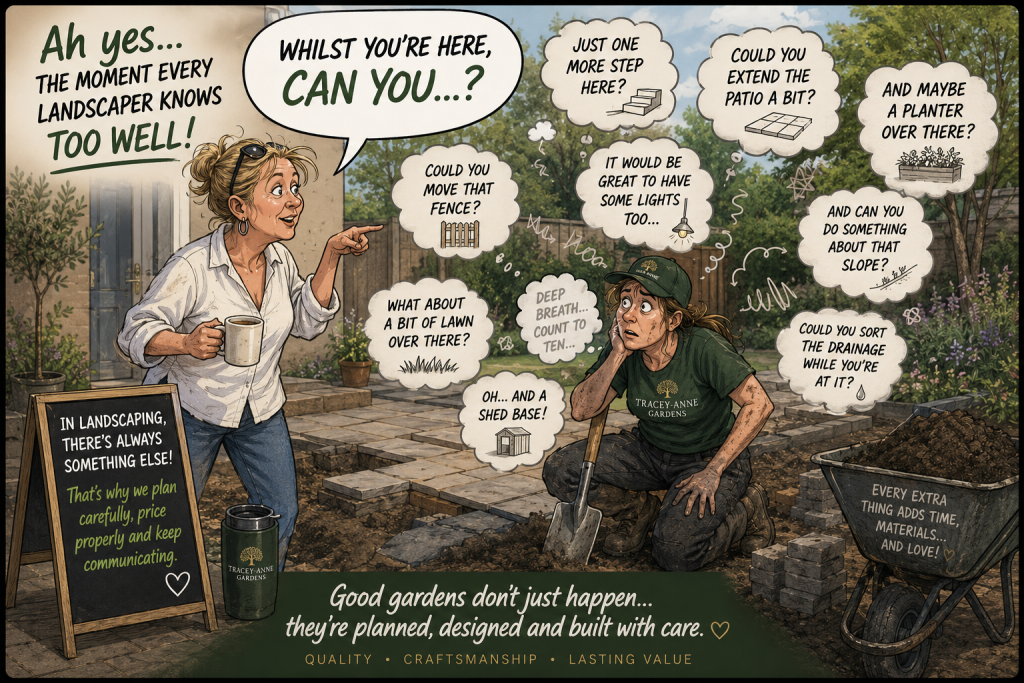
There is one other unpredictable element in almost every garden transformation — the client! Or, as it is often known, the "whilst you're here, can you just…" moment.
Once a garden begins to take shape, it is completely understandable that new ideas appear. A patio might look so good that extending it suddenly seems irresistible. A new fence might highlight another area that would benefit from attention, or the perfect place for an additional step, planter or feature might become obvious only once construction is underway.
We don't see this as a problem. Gardens evolve during construction and sometimes the best ideas emerge when you can finally see the new space taking shape.
Where clients request additional work, we simply discuss the options and costs before proceeding so there are no surprises.
A Garden Is an Investment
Professional landscaping can represent a significant investment.
But unlike many purchases, a beautifully designed and properly constructed garden can be enjoyed every day for many years.
It can create additional living space, transform how you use your home and provide somewhere to entertain, relax and spend time with family and friends.
That is why we believe the most useful question isn't simply:
“How much does landscaping cost?”
It is:
“What am I getting for my investment?”
At Tracey-Anne Gardens, we create complete garden transformations throughout Clitheroe, Whalley and the Ribble Valley, combining thoughtful design, quality materials and experienced construction to create gardens designed to look beautiful — and built to last.UndoAccept