The Complete Guide to Patio Design & Installation | Sandstone & Porcelain Patios | Tracey-Anne Gardens
More Than Just Paving – The Foundation of Your Garden
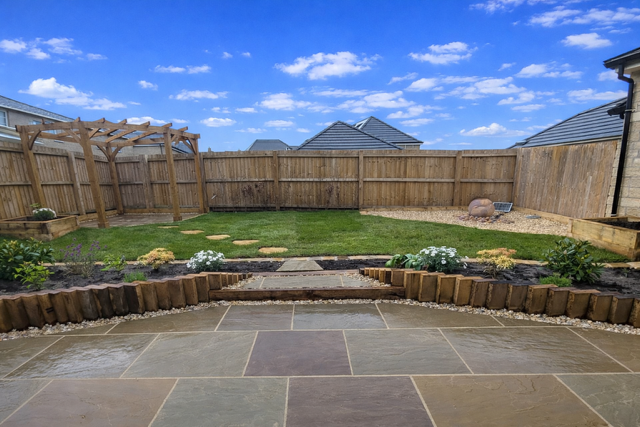
A patio is far more than somewhere to place a table and chairs. It forms the heart of the garden, creating a seamless extension of your home and providing the foundation for outdoor entertaining, relaxation and family life.
Whether you choose the timeless character of natural Indian sandstone or the sleek appearance of contemporary porcelain paving, the finished result is only ever as good as the installation beneath it.
At Tracey-Anne Gardens, we believe exceptional patios are built from the ground up. While beautiful paving captures the eye, it's the unseen construction that determines whether your patio will still look stunning in twenty years' time.
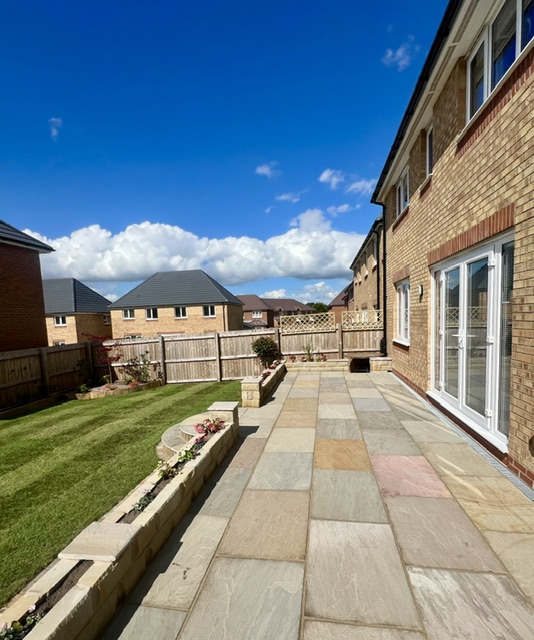
A garden transformation project completed by Tracey-Anne Gardens in Billington including an Indian sandstone raised terrace in Raj Green, all flags the same size 900mmx600mm and laid in parallel lines.
Choosing the Right Material
Indian Sandstone
Natural Indian sandstone remains one of the UK's most popular paving materials, and for good reason.
Every flag is unique, with natural variation in colour, texture and fossil markings creating a character that manufactured products simply cannot replicate.
Benefits include:
- Natural, timeless appearance
- Excellent slip resistance
- Wide choice of colours including Kandla Grey, Raj Green and Fossil Mint
- Complements both traditional and contemporary gardens
- Individual character in every slab
Porcelain Paving
Porcelain has become increasingly popular for contemporary garden designs.
Manufactured under extremely high temperatures, porcelain paving is incredibly dense, making it resistant to staining, algae and weathering.
Benefits include:
- Modern, clean appearance
- Consistent colour and sizing
- Extremely low maintenance
- Highly resistant to staining
- Ideal for contemporary outdoor spaces
Porcelain requires particularly accurate installation due to its precise dimensions and low water absorption, making experienced installation essential.
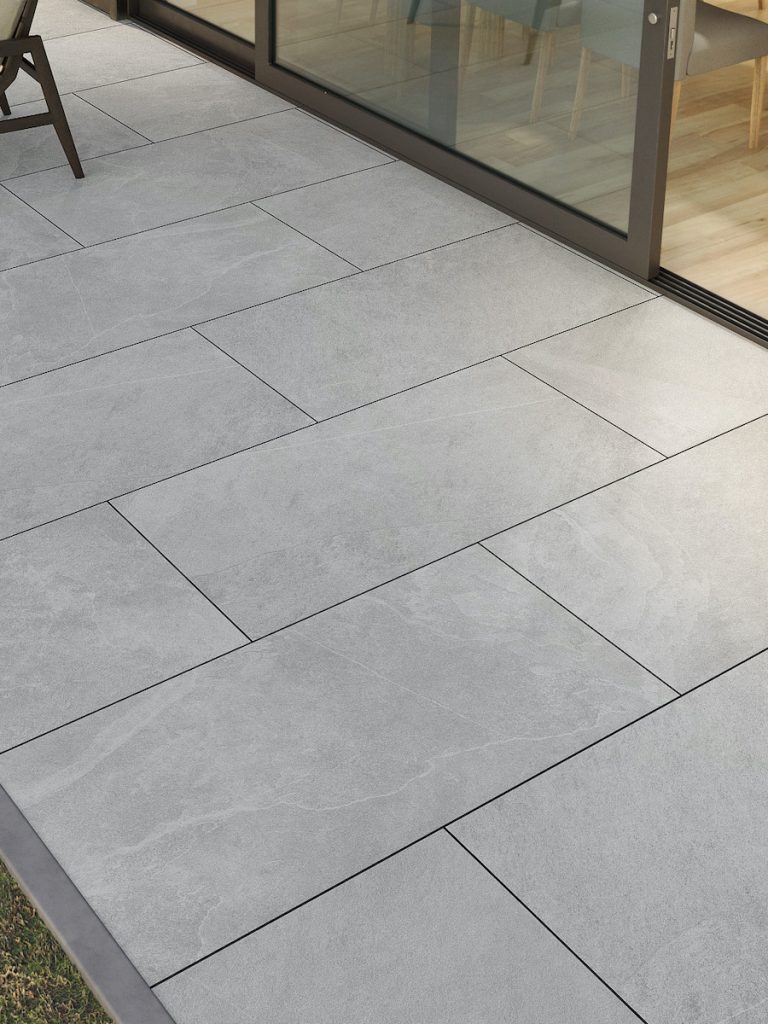
Grey porcelain tiles each flag 1200mm x 600mm
Why the Foundations Matter
Many homeowners naturally focus on the paving itself.
Professional landscapers focus on what lies underneath.
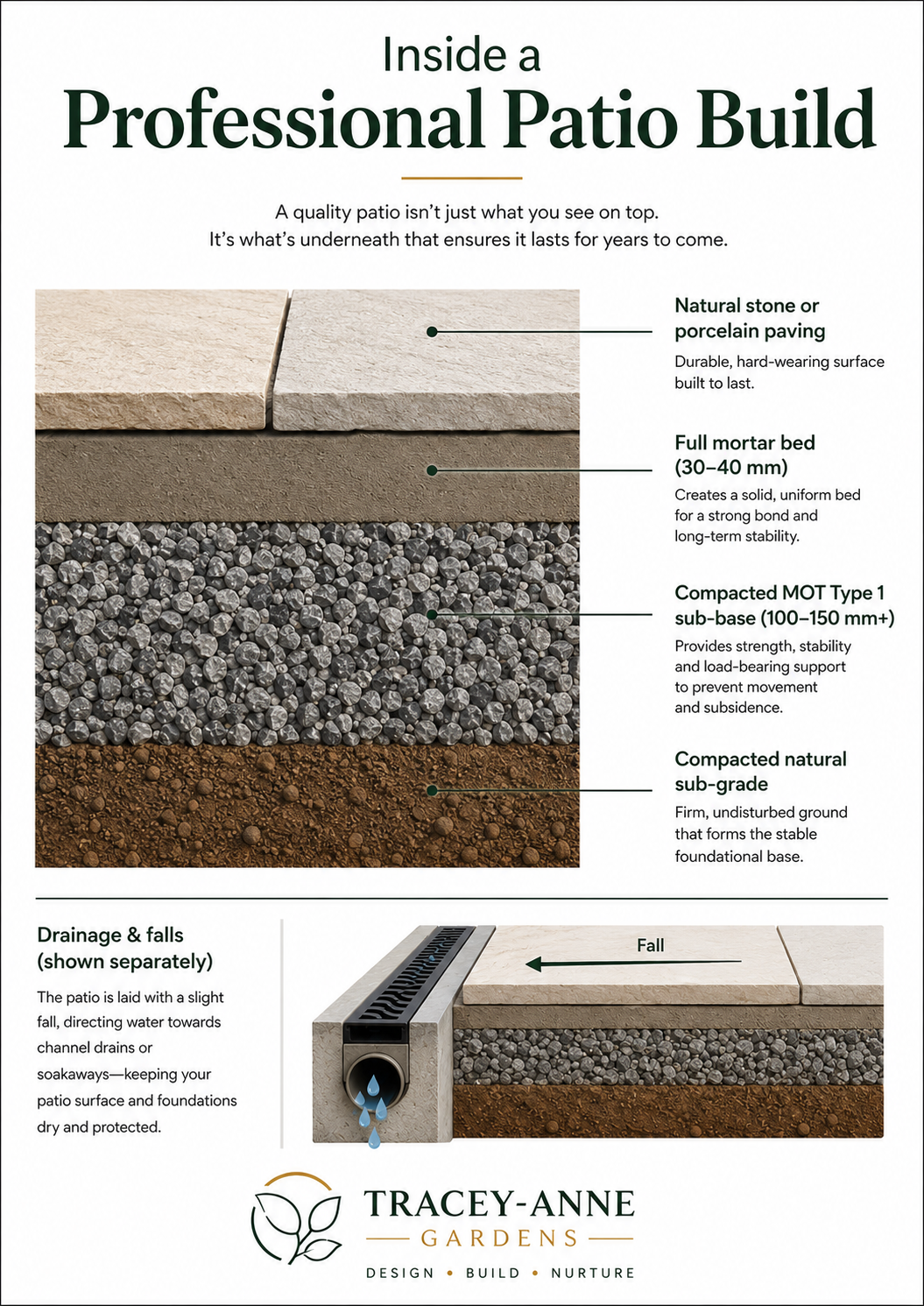
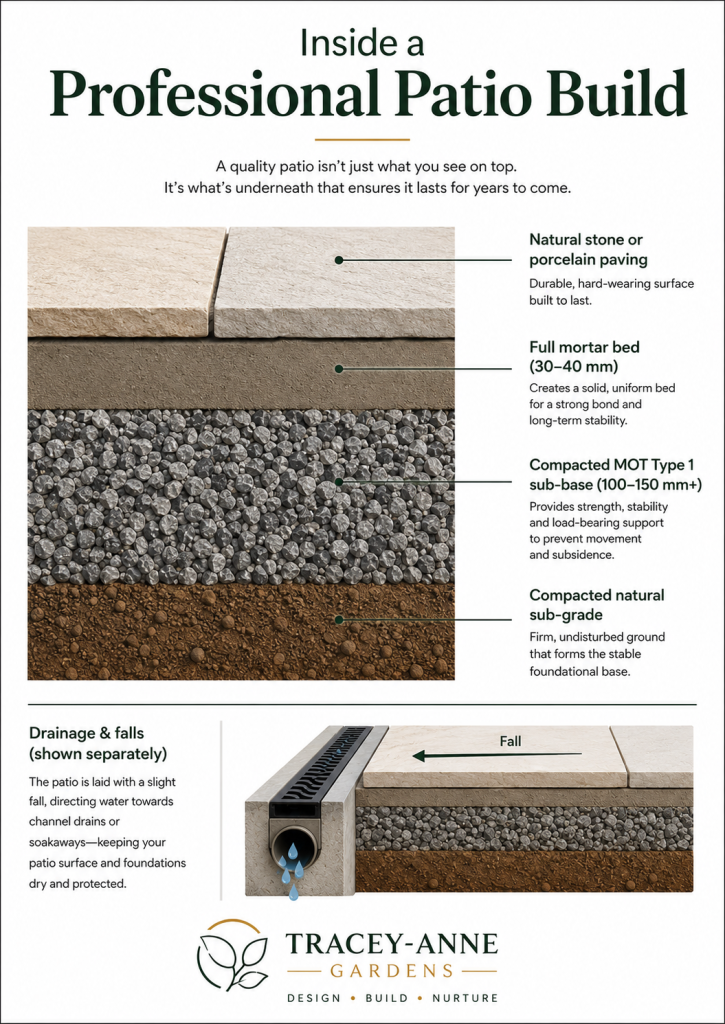
The visible paving may only represent around 40 mm of the overall construction, yet it is the foundation beneath it that determines whether the patio remains level and stable for decades.
A properly constructed patio should include:
- Correct excavation
- Stable sub-grade
- Appropriate sub-base
- Accurate levels and falls
- Suitable bedding layer
- Professional installation
- High-quality jointing
Every layer plays a vital role in creating a durable, long-lasting patio.
Preparing the Ground Properly
Every successful patio begins with careful site preparation.
This includes:
- Removing unsuitable soil
- Excavating to the correct depth
- Accounting for finished levels
- Protecting existing structures
- Planning drainage before any paving is laid
Rushing this stage often leads to settlement, uneven paving and drainage problems later.
The Importance of the Sub-base
The sub-base is arguably the single most important part of the entire installation.
Constructed using well-compacted MOT Type 1 aggregate, it provides the structural strength needed to support the paving while preventing movement over time.
A professionally compacted sub-base:
- Prevents sinking
- Minimises movement
- Supports heavy furniture and foot traffic
- Helps distribute loads evenly
- Improves long-term durability
Unfortunately, inadequate excavation or insufficient compaction remains one of the most common causes of patio failure.
Getting the Levels Right
One of the most overlooked aspects of patio construction is achieving the correct finished levels.
A patio should feel perfectly level when used, while still incorporating carefully calculated falls to direct surface water away from buildings.
Poor levels can result in:
- Standing water
- Slippery surfaces
- Water entering the property
- Frost damage
- Unsightly puddles
Experienced installers use laser levels, string lines and years of practical knowledge to achieve an almost invisible gradient that ensures effective drainage without compromising appearance.
Drainage – Protecting Your Investment
Water is one of the greatest threats to any hard landscaping project.
Professional drainage design may include:
- Falls built into the paving
- Linear drainage channels
- Soakaways
- Permeable areas
- Drainage around retaining walls
- Surface water management
Good drainage not only protects the patio but also helps safeguard your property.
Expert Laying Makes All the Difference
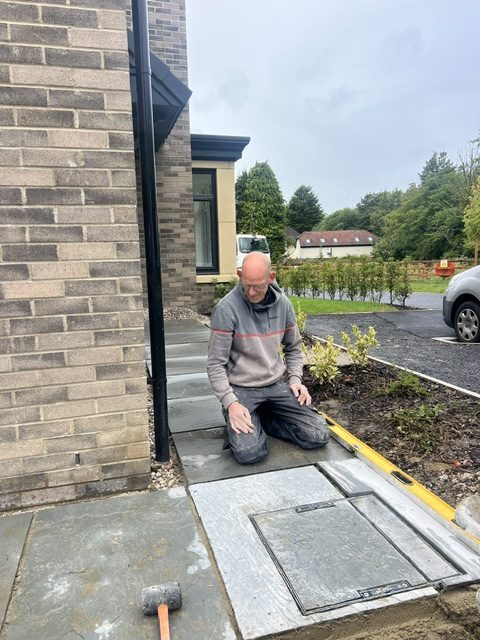
Laying paving is far more than placing slabs side by side.
Each flag requires careful positioning, checking for:
- Level
- Alignment
- Joint width
- Surface consistency
- Pattern continuity
- Edge detail
Natural sandstone often requires selecting and rotating slabs to create the most attractive overall appearance.
Porcelain demands exceptional accuracy due to its consistent manufacturing tolerances.
The difference between an average installation and an exceptional one often lies in these details.
Jointing – The Finishing Touch
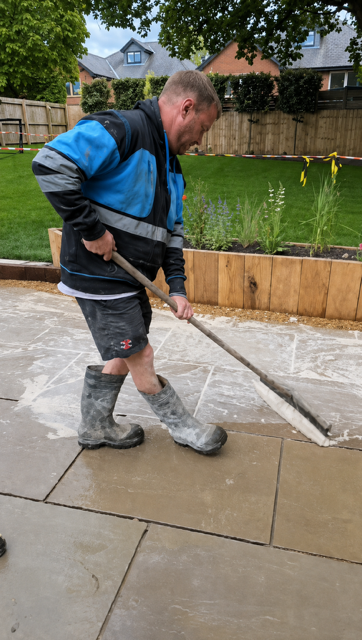
Once the paving has been laid, the joints complete both the appearance and structural performance of the patio.
Modern resin-based jointing compounds provide:
- Strong, flexible joints
- Weed resistance
- Reduced washout
- Excellent durability
- Attractive, consistent finish
Selecting the correct product and applying it in suitable weather conditions are essential to achieving the best results.
Why Experience Matters
Every garden presents different challenges.
Experienced landscape professionals understand how to adapt construction techniques to suit:
- Clay soils
- Sloping gardens
- Existing drainage
- Retaining walls
- New-build properties
- Older homes
- Tree roots
- Existing services
This knowledge cannot be replicated simply by following online tutorials.
Years of practical experience allow problems to be anticipated and resolved before they become costly.
Choosing the Right Landscape Contractor
When comparing quotations, don't simply compare prices.
Ask questions such as:
- How deep will the excavation be?
- What sub-base will be used?
- How will drainage be managed?
- What bedding method is proposed?
- Which jointing system will be used?
- Is the contractor fully insured?
- Can I view previous projects?
- Are there genuine customer reviews?
A lower quotation can often reflect reduced preparation beneath the surface—something that may only become apparent years later.
Creating Outdoor Spaces That Last
A professionally constructed patio should provide decades of enjoyment while adding beauty and value to your home.
Whether you prefer the natural charm of sandstone or the contemporary elegance of porcelain, success lies not simply in choosing attractive paving but in ensuring every stage of the installation is completed with care, precision and experience.
At Tracey-Anne Gardens, we specialise in complete garden transformations, designing and constructing outdoor spaces that are built to last. From the first consultation through design and installation, every patio is created with the same attention to detail, ensuring the finished garden is every bit as beautiful beneath the surface as it is above it.