
Straight Lines or Curves? Why I Let the Garden Decide
There is something very satisfying about a perfectly straight line in a garden. It can create order, structure and a strong relationship with the architecture of a house.
But not every garden wants to be a collection of rectangles.
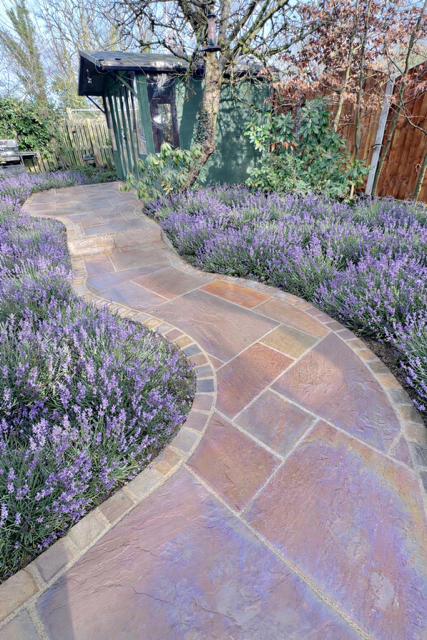
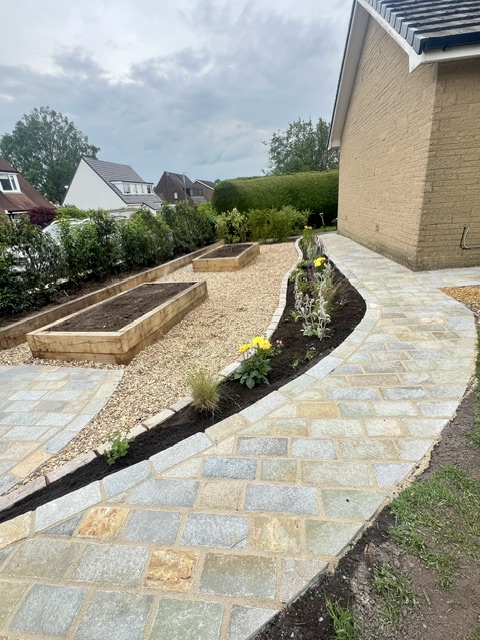
One feature that has become increasingly recognisable in my designs at Tracey-Anne Garden Design is the use of curves — sweeping sandstone paths, curved patios, flowing planting beds and, where appropriate, curved retaining structures.
It's also interesting to see curves receiving renewed attention in contemporary landscape design. But for me, this isn't about following a fashion.
I've been using curves because they solve problems, create movement and can make the hard landscaping sit much more naturally within the garden.
A curve should have a reason.
The best ones feel as though the garden itself determined where they needed to go.
Curves aren't new — but designers are looking at them again
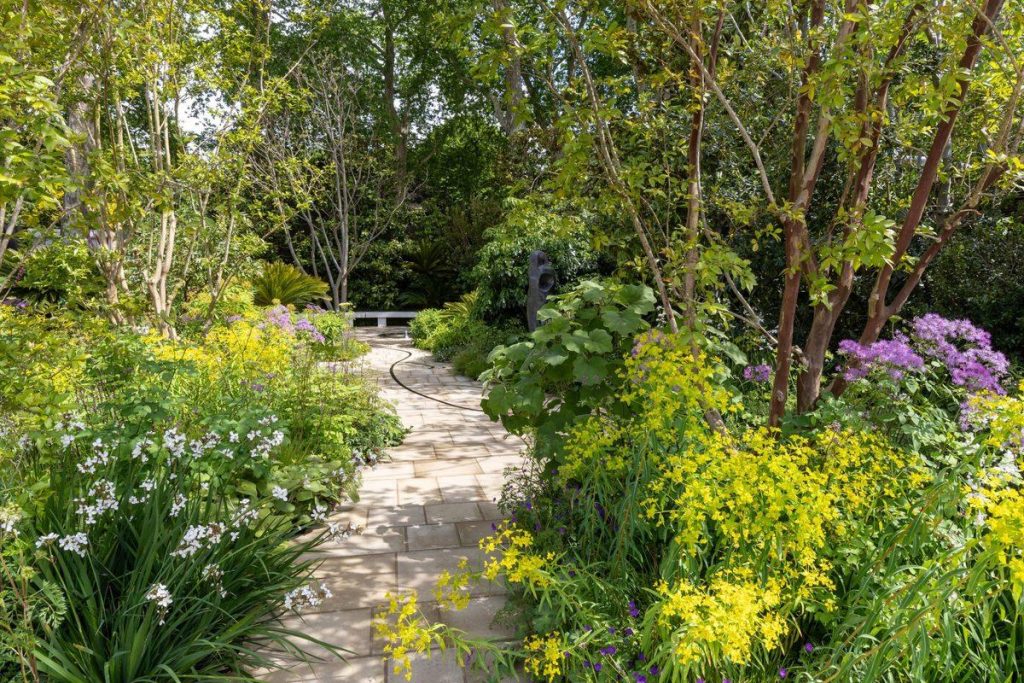
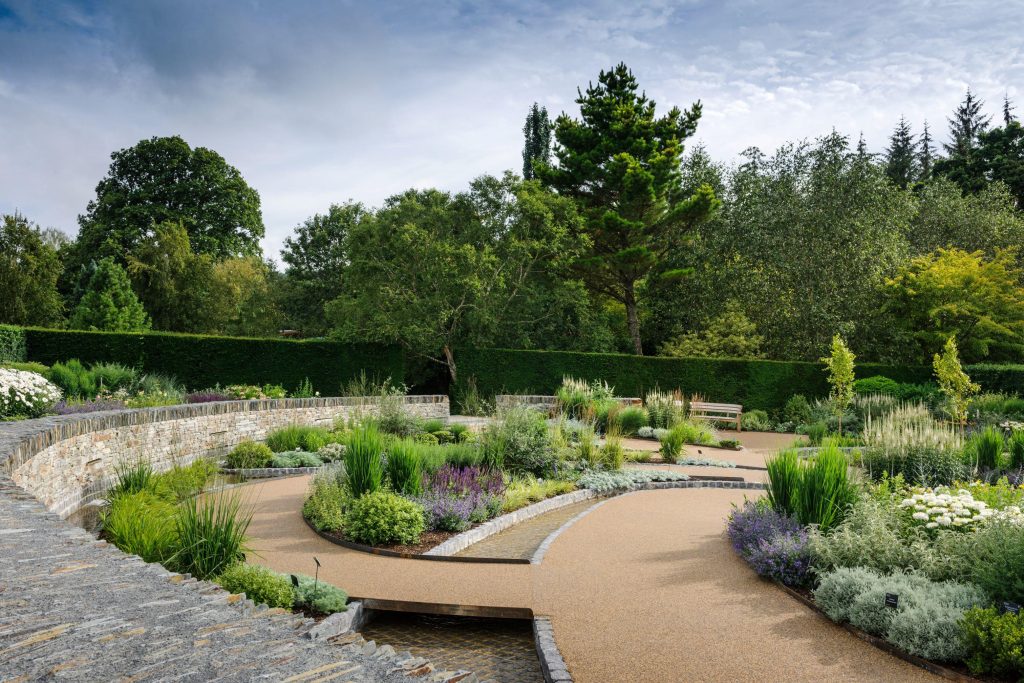
There are some excellent examples of this approach in contemporary British garden design.
At the 2026 RHS Chelsea Flower Show, landscape designer Tom Stuart-Smith created the Tate Britain Garden around a gently curving path constructed from stone reclaimed from the existing Tate garden. Rather than taking visitors directly across the space, the path moves through rich planting towards a circular seating area.
Garden designer Pollyanna Wilkinson has similarly spoken about using winding pathways and soft curves in her own gravel garden, where the emphasis is on resilient planting rather than hard landscaping dominating the space.
These gardens are very different, but the principle is similar: the line determines how we experience the landscape.
That is something I recognise very strongly in my own work at Tracey-Anne Gardens
Why are so many gardens designed with straight lines?
There are perfectly practical reasons.
Houses are generally rectangular. Fence lines are straight. Paving arrives in squares and rectangles. Timber comes in straight lengths. And measuring and constructing a rectangular patio is relatively straightforward.
So it isn't surprising that a conventional landscaping solution can become:
rectangular patio → rectangular lawn → borders around the perimeter.
There is nothing inherently wrong with that. In the right garden, strong geometric lines can look exceptionally good.
But it shouldn't be the automatic solution simply because it is the easiest one to draw or construct.
Good garden design starts by looking at the space itself — the architecture, boundaries, existing trees, changes in level, views, destinations and, importantly, how people will actually move through and use the garden.
Sometimes those considerations suggest straight lines.
Sometimes they very clearly don't.
Curves change the way we move through a garden
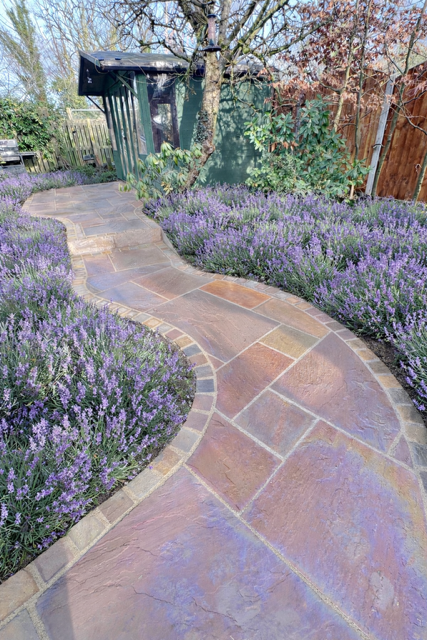
A path isn't simply a way of getting from one place to another.
Its alignment affects how we experience the garden.
A completely straight path immediately reveals its destination. Introduce a carefully considered curve and something different happens.
The eye follows the line. Part of the garden can disappear from view. Perhaps there's a seating area around the corner, a specimen tree, a pergola or simply another section of the garden waiting to be discovered.
This can be particularly effective in relatively modest gardens because you don't have to see everything at once.
It's not curved simply to make an interesting shape on the plan.
The curve controls the journey.
That's an important distinction.
A good curve isn't a wiggle
This is perhaps one of the most important principles.
Curved design doesn't mean drawing lots of little waves.
In fact, that can look artificial very quickly.
A confident curve generally needs space and a generous radius. It should sweep rather than wobble.
When I use a curved path in a TAG design, I'm thinking about what that line is doing.
Is it taking us around an existing tree?
Is it directing the eye towards something?
Is it disguising an awkward boundary?
Is it allowing a planting bed to become deeper?
Is it changing the way we approach another part of the garden?
If the curve isn't achieving anything, it probably doesn't need to be there.
Curved patios can soften hard landscaping
Patios are increasingly important parts of our gardens. They're outdoor dining rooms, entertaining spaces and places to sit and enjoy the garden.
But a patio isn't simply an area of paving.
Its proportion, position and relationship with the house and surrounding garden determine how successful it is.
A large rectangular patio can sometimes create a very hard visual division:
house | paving | garden.
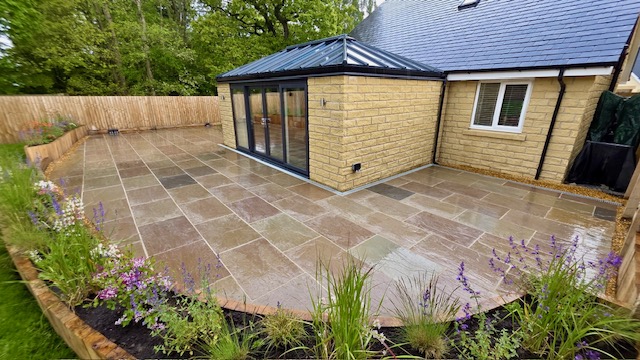
Introducing a curved edge can soften that transition considerably.
It allows planting to push into the paved area while the patio extends into the garden in return.
Instead of the planting being confined to a narrow strip around the perimeter, the two begin to interact.
This is something I use frequently in TAG designs.
The hard landscaping provides structure, but I don't want it to feel as though the paving has simply been dropped into the garden.
Good landscaping provides structure. Good design makes that structure belong.
Natural stone and curves
Natural sandstone works particularly well with this style of design.
There can be an assumption that a curved patio or pathway requires curved paving units.
It doesn't.
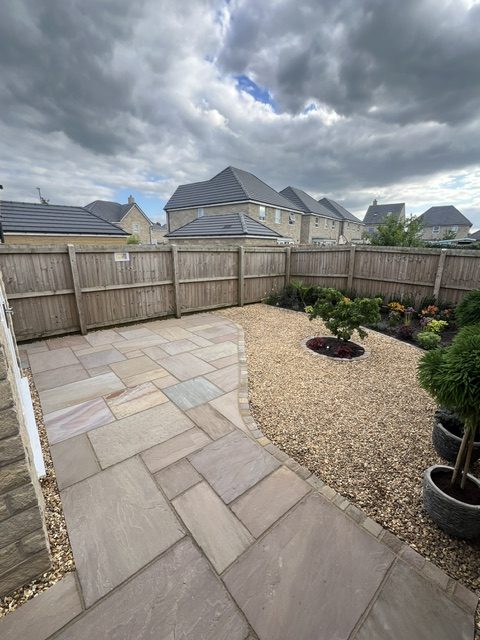
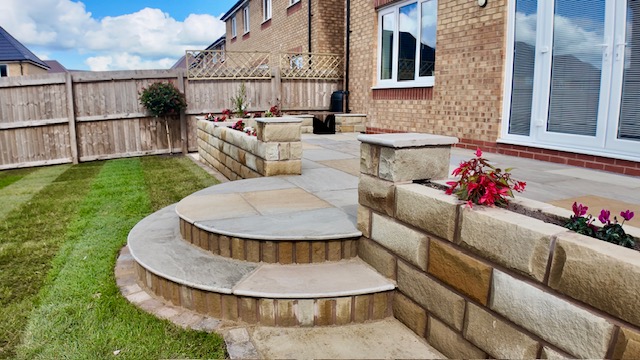
Rectangular and mixed-size sandstone flags can sit beautifully within a curved boundary. The craftsmanship is in the setting out, cutting and finishing of the edge — perhaps using small sandstone setts to emphasise the line.
The result gives us an interesting contrast:
individual pieces of paving remain geometrically ordered while the overall landscape flows around them.
It's a principle visible at a much higher-profile scale in Stuart-Smith's Tate garden, where reclaimed stone is used within the curving route rather than allowing the paving material to dictate a rigid geometry.
Curves can solve awkward gardens
Curves aren't purely aesthetic.
Very few gardens are perfect rectangles.
Boundaries taper. Existing trees sit inconveniently in the middle. Ground levels change. Garages, extensions and sheds interrupt sightlines. Sometimes the house itself isn't square to the garden.
Trying to impose a rigid grid on all those conditions can actually accentuate them.
A curve can absorb an awkward boundary, move a path naturally around an existing tree, transition between two areas sitting at different angles or create additional depth where a straight line would emphasise how narrow the garden is.
In these situations, the curve isn't decoration.
It's solving a design problem.
And that, for me, is the difference between using curves and simply creating a curvy garden.
There is another source of inspiration outside conventional garden design.
British artist Andy Goldsworthy is renowned for making work that responds directly to its landscape.
His celebrated stone wall at Storm King Art Center in New York doesn't take the shortest route across the landscape. It snakes through the site, responding to the terrain and existing environment.
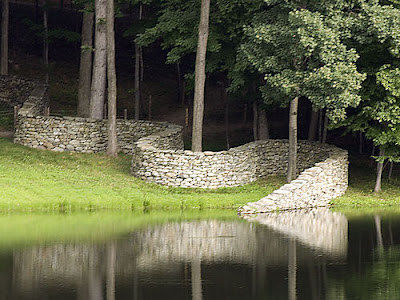
That relationship between stone, line and landscape is fascinating.
Goldsworthy's work is obviously art rather than domestic landscaping, but the underlying lesson translates beautifully:
Don't always force the landscape to follow the line. Sometimes let the line follow the landscape.
Curves and mature properties
This is particularly relevant to many of the properties we work with in Lancashire.
Older houses, stone cottages, converted buildings and established gardens don't always sit comfortably beside an extremely rigid contemporary landscape.
A sweeping sandstone path, gently curved patio or organically shaped planting bed can create a softer relationship with an older building.
The garden doesn't need to imitate the age of the property.
But neither should it ignore it.
The objective is to create something new that feels as though it belongs there.
For a very contemporary property, I might interpret curves quite differently — perhaps one enormous sweeping radius intersecting otherwise strong architectural lines.
The principle remains the same:
respond to the property rather than impose a predetermined style upon it.
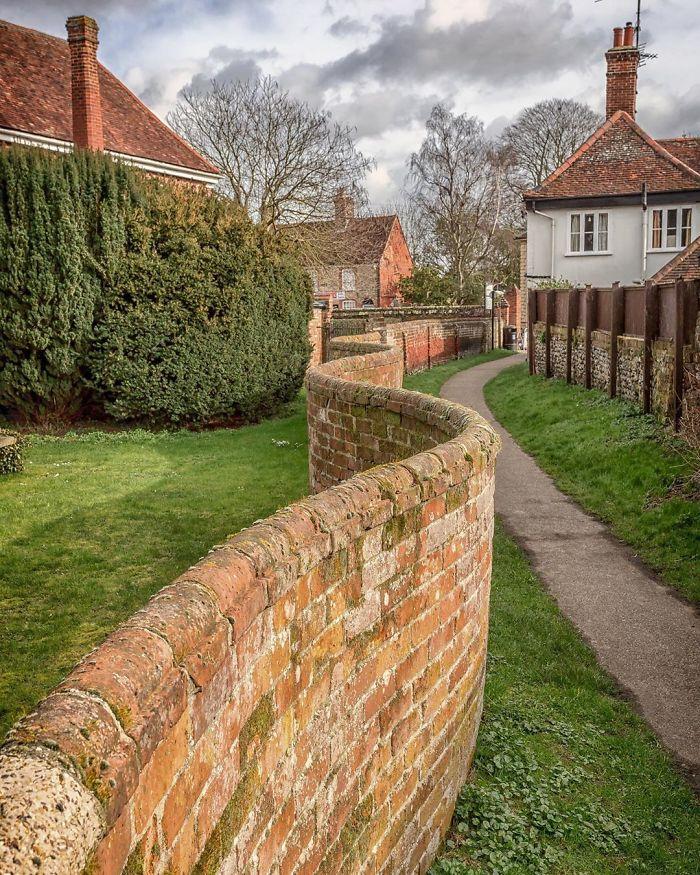
Crinkle-crankle walls — proof that curves certainly aren't new
One of the most fascinating historical examples of purposeful curves is the crinkle-crankle wall — a serpentine garden wall constructed using alternating concave and convex curves.
The form is centuries old, with the curves providing structural stability while historically also creating useful sheltered growing spaces.
And remarkably, the idea has just received a very contemporary interpretation.
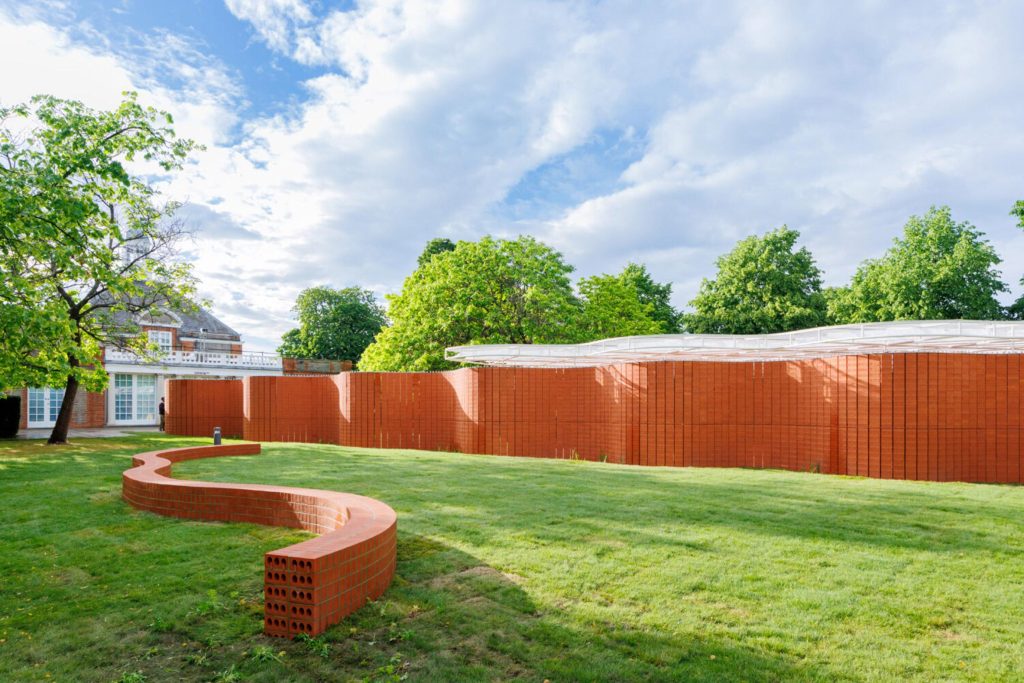
For the 2026 Serpentine Pavilion in London, Mexican architecture studio Lanza Atelier used an undulating brick wall inspired by crinkle-crankle construction. The designers specifically describe the serpentine wall as a device that guides people through the space.
That makes it a rather wonderful bridge between historic and contemporary design.
An ancient construction principle hasn't suddenly become modern.
It has simply been reinterpreted.
Will curved gardens date?
This is an important question because curves are receiving considerable design attention at the moment.
My answer is: they can — if the curve itself is the fashion.
A garden filled with arbitrary waves because curves happen to be popular could look dated surprisingly quickly.
But consider:
a path curving around a mature tree;
a patio sweeping towards a view;
a retaining wall following a genuine change in level;
or a planting bed wrapping around a seating area.
Those lines have a reason to exist.
And design with a reason tends to age considerably better than design created to follow a trend.
The crinkle-crankle wall rather neatly proves the point. Serpentine geometry has been used in landscapes for centuries and is still being reinterpreted by designers and architects today.
Straight and curved lines can work together
Using curves doesn't mean everything needs to curve.
In fact, that can become overwhelming.
Some of the strongest gardens combine the two.
The architecture of the house might establish strong straight lines.
A rectangular patio immediately outside it could reinforce those lines.
Then, as the garden moves away from the building, a path begins to sweep or a curved planting bed interrupts the geometry.
The contrast makes each element stronger.
This is why I don't begin a TAG design thinking:
“Where can I put a curve?”
I begin by asking:
“What does this garden need?”
Creating a recognisable design language at TAG
Curved paths and patios have become something of a signature in my work at Tracey-Anne Garden Design.
They help differentiate my designs, but that's a consequence rather than the objective.
I'm interested in creating complete gardens where the paths, patios, levels, retaining structures, decking and planting all relate to one another.
Where does the path take you?
Why does the patio finish at that particular point?
What happens where paving meets planting?
Can a change of level become part of the design rather than simply a construction problem?
What do you see when you look into the garden from inside the house?
And what makes you want to walk outside and explore it?
Those decisions happen before construction begins.
And that's ultimately the difference between simply installing individual landscaping elements and designing a garden as a whole.
Let the garden decide
Tom Stuart-Smith's flowing reclaimed-stone pathway, Pollyanna Wilkinson's soft gravel-garden curves, Andy Goldsworthy's extraordinary serpentine stonework and even the centuries-old crinkle-crankle wall all demonstrate variations of the same principle:
a line through a landscape can do far more than divide one area from another.
It can lead.
Reveal.
Soften.
Connect.
And solve problems.
At Tracey-Anne Garden Design, curves have become an important part of my design vocabulary.
But there isn't a rule that says curved gardens are better than straight ones.
Some spaces demand crisp geometry. Others need something softer.
The skill is recognising which is appropriate.
So when I'm deciding between a straight line and a curve, I come back to one very simple principle:
Let the garden decide.
References: RHS — Tom Stuart-Smith's Tate Britain Garden · Pollyanna Wilkinson on winding pathways and soft curves · 2026 Serpentine Pavilion and the crinkle-crankle wall · Interview with Lanza Atelier about the serpentine wall