
How to Keep Your Garden Looking Good Over Winter
When we think about a beautiful garden, we naturally tend to picture it in spring or summer — borders full of flowers, lush planting and long evenings spent outside.
But a well-designed garden shouldn't simply disappear once winter arrives.
In fact, winter is often when the underlying design of a garden becomes most apparent. With fewer flowers and deciduous plants losing their leaves, the structure, shapes, textures and materials within the garden suddenly have nowhere to hide.
With thoughtful planting and a few relatively simple additions, a garden can remain attractive, colourful and interesting throughout the colder months.
Start with evergreen structure
One of the most important elements of a garden that looks good all year is evergreen planting.
Evergreen shrubs provide the framework of a border when herbaceous plants have died back and deciduous shrubs are bare. Rather than filling a garden entirely with evergreens, I prefer to use them strategically amongst seasonal planting so that there is always something holding the design together.
Even better are evergreen shrubs that also provide flowers, berries, fragrance or changing foliage.
Some excellent choices include:
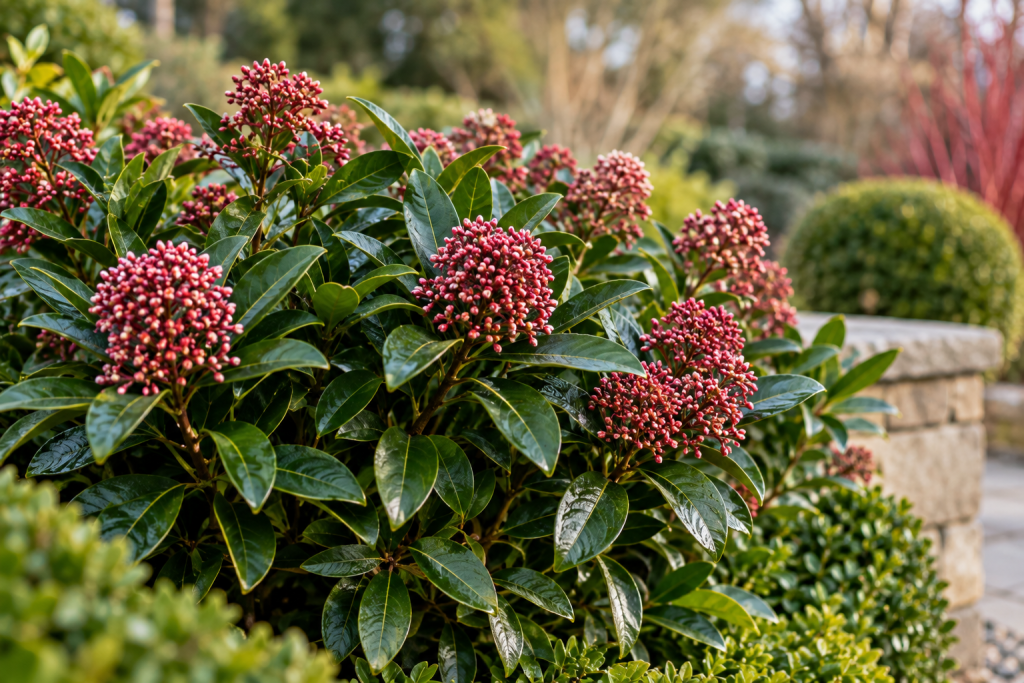
- Skimmia japonica – compact evergreen foliage with attractive buds, fragrant spring flowers and, on suitable female varieties with a pollinator, colourful berries.
- Sarcococca (Christmas box) – an understated evergreen shrub with wonderfully fragrant winter flowers. Ideal near a path or doorway where you can appreciate the scent.
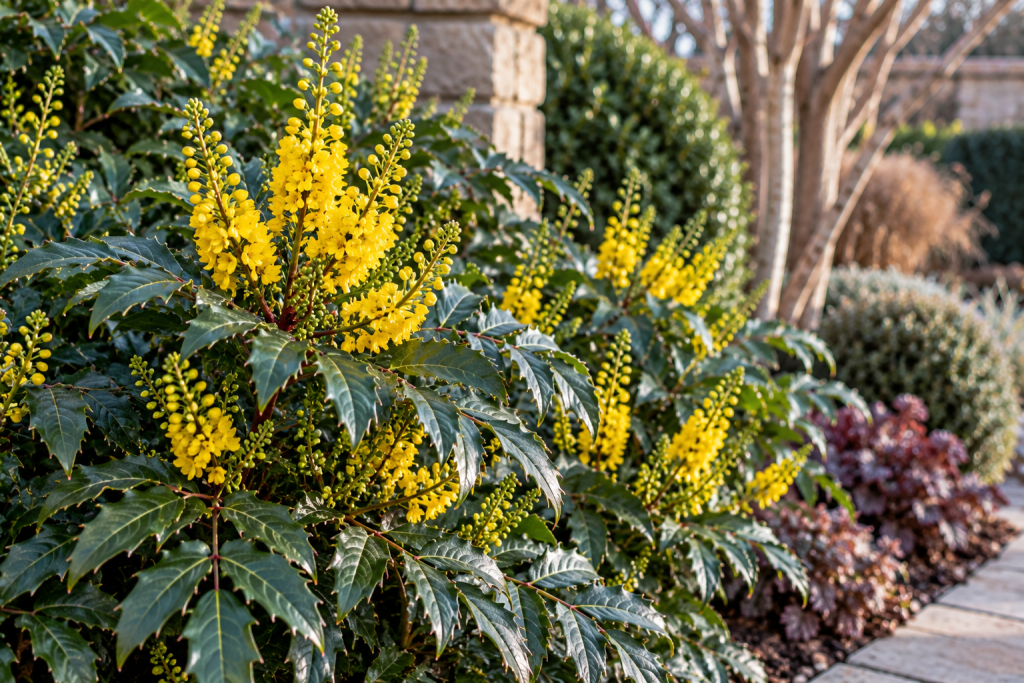
- Mahonia – architectural evergreen foliage with bright yellow winter flowers that provide valuable early nectar for pollinators.
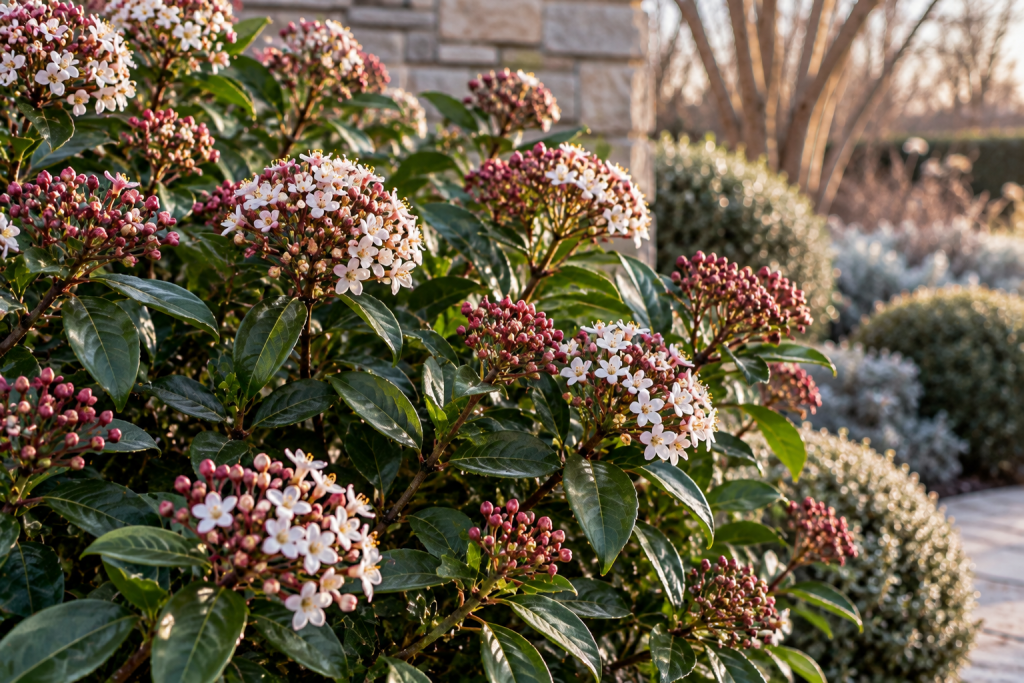
- Viburnum tinus – a reliable evergreen producing clusters of small flowers through winter and into spring.
- Camellia – glossy evergreen foliage followed by spectacular flowers from late winter into spring.
- Choisya – a useful rounded evergreen shrub with aromatic foliage and white flowers, usually in spring with the possibility of a second flush later in the year.
- Daphne – several varieties provide evergreen or semi-evergreen foliage together with beautifully scented winter or early-spring flowers.
The important thing is not simply to add evergreen shrubs randomly. Think about shape and repetition. A rounded evergreen, an upright specimen and lower evergreen groundcover can create layers and structure even when surrounding perennials have disappeared underground.
Add winter colour to pots and containers
Containers are one of the easiest ways to introduce seasonal colour because they can be refreshed as the seasons change.
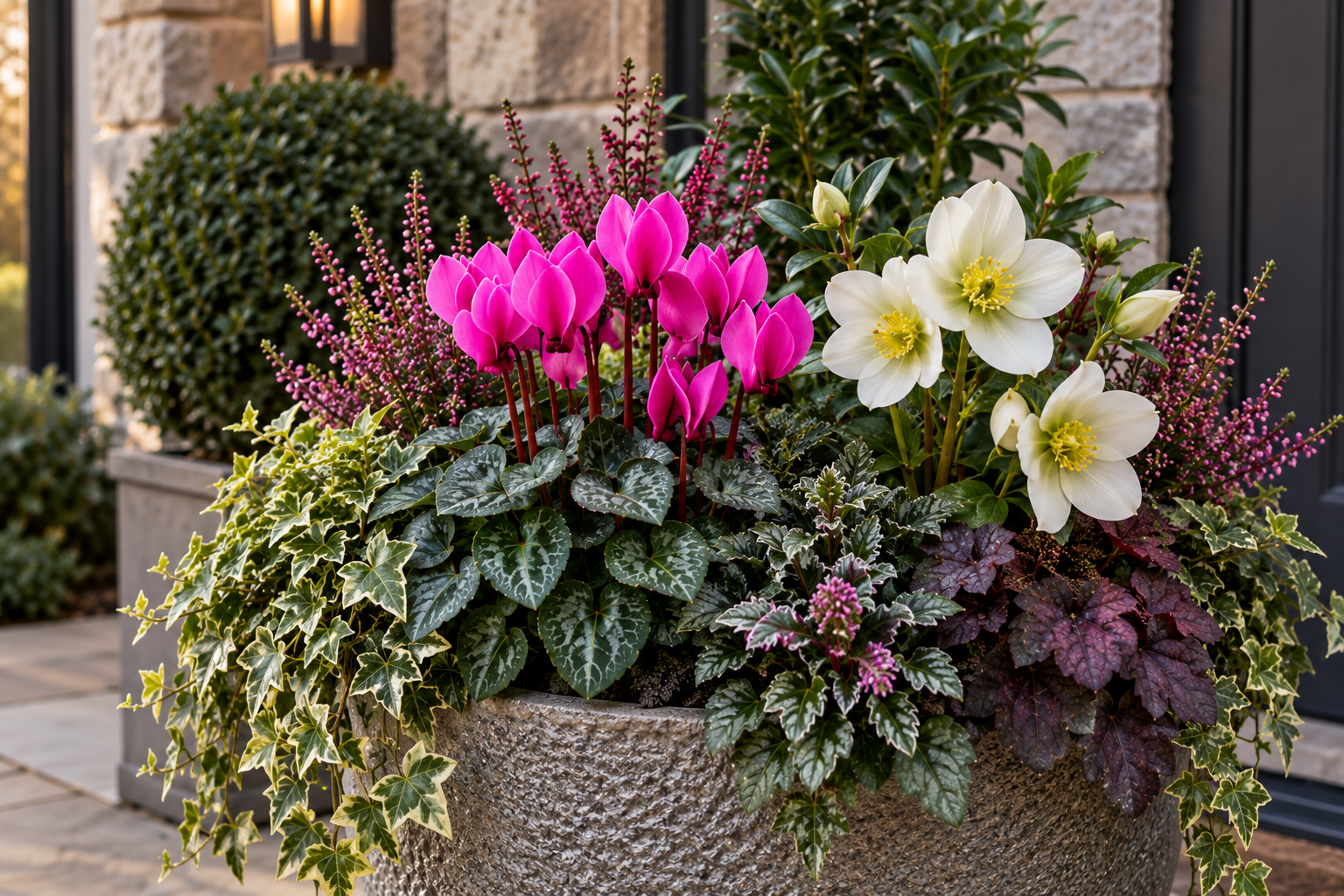
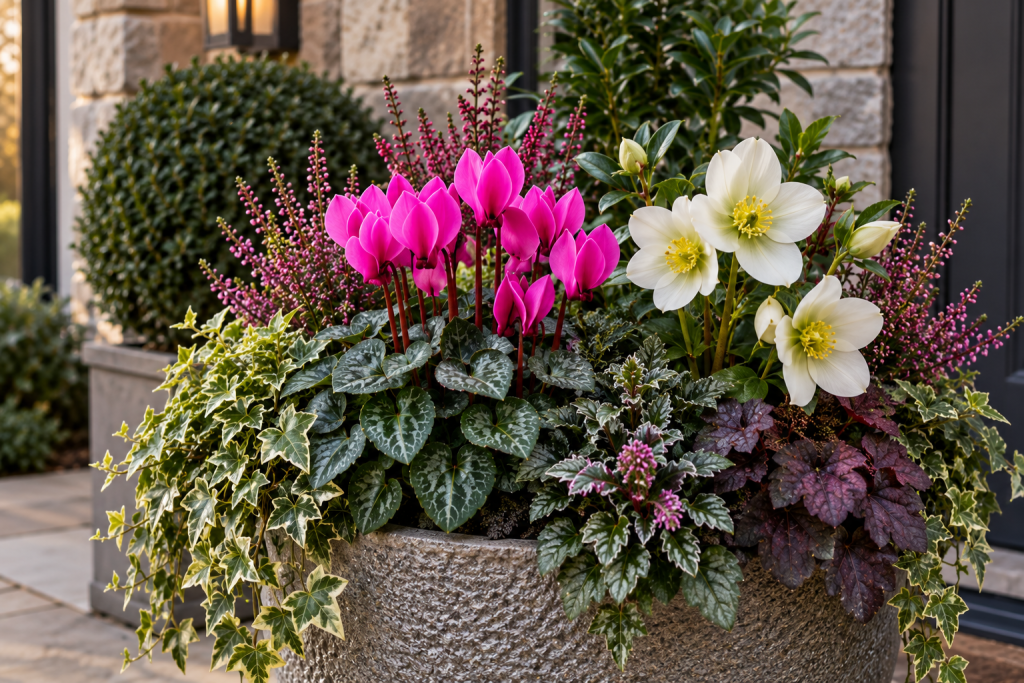
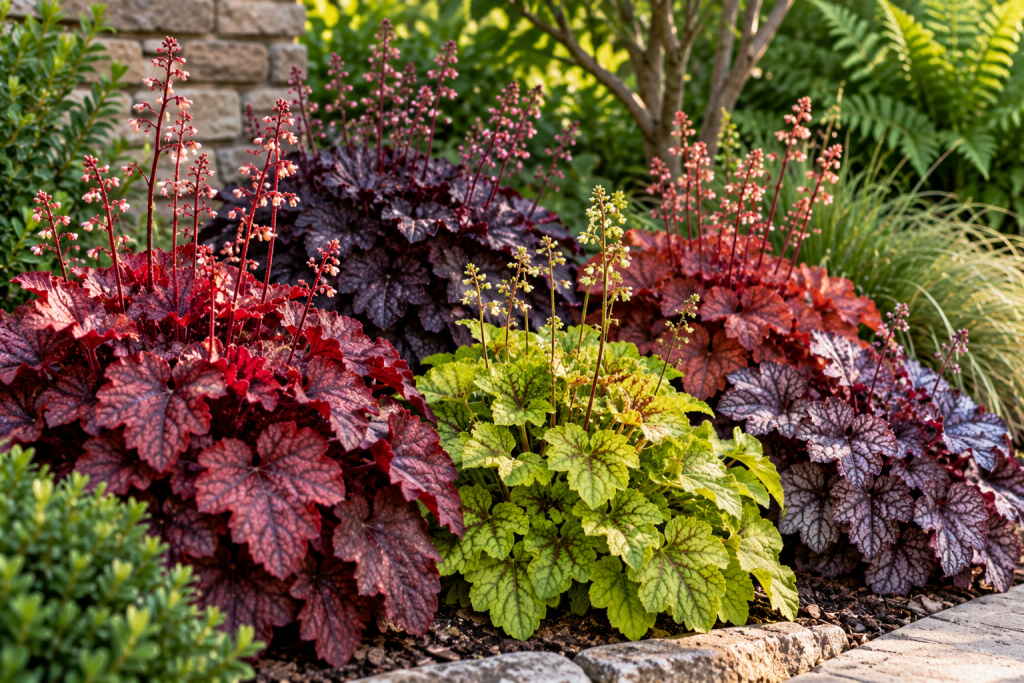
Cyclamen are particularly useful for winter displays, providing strong colour when very little else is flowering. Combine them with winter-flowering violas and pansies, hellebores, heucheras, small evergreen ferns or trailing ivy.
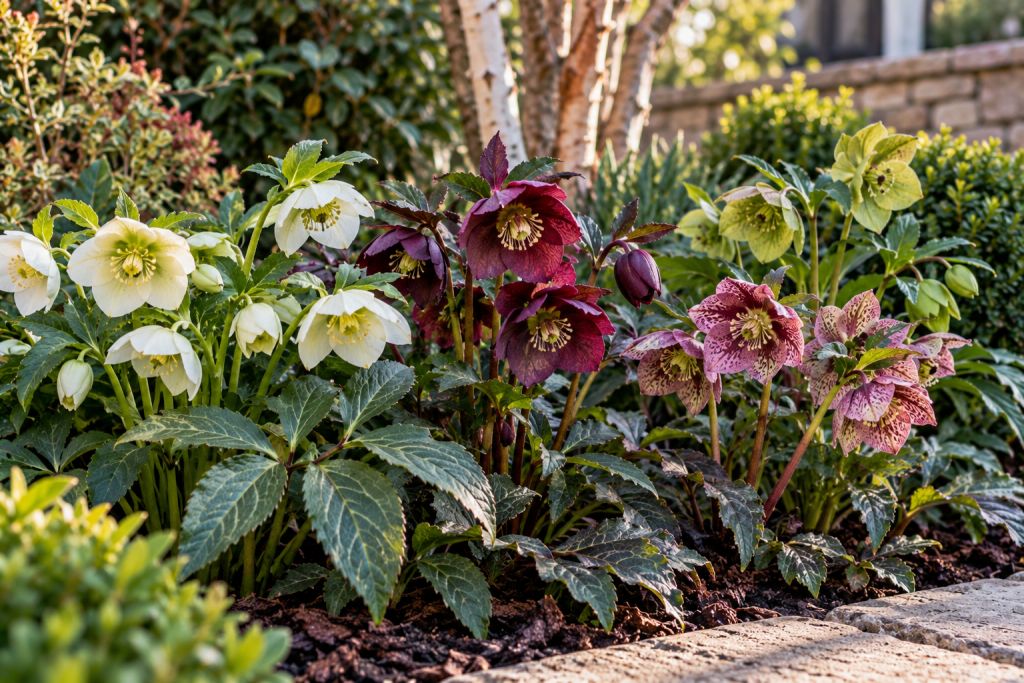
Hellebores are one of my favourite winter plants. Their flowers appear at precisely the time when a garden needs them most, and they work equally well planted within a border or incorporated into a generous winter container.
For something more architectural, add a small evergreen shrub such as Skimmia or Euonymus to the centre of a container and surround it with seasonal plants. This gives the arrangement height and structure rather than creating a flat collection of bedding plants.
Don't forget bulbs either. Planting tulips, narcissi, crocus and alliums beneath winter container planting means the display will naturally evolve as winter gives way to spring.
Don't underestimate bark and mulch
Winter is an excellent time to look at the appearance of the borders themselves.
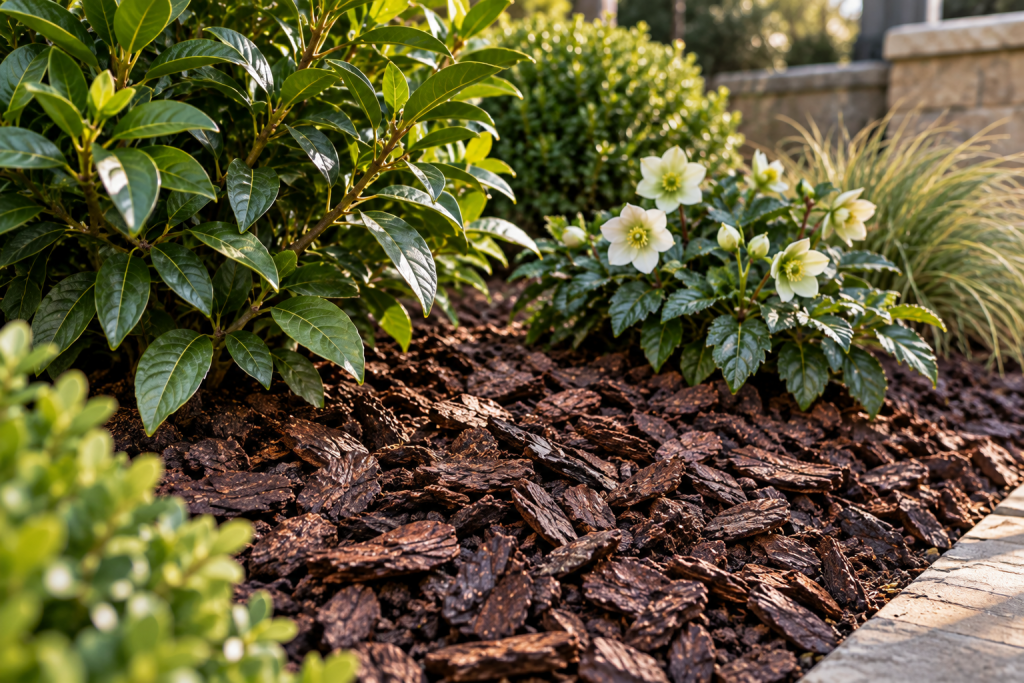
Once summer planting has died back, areas of exposed soil become much more noticeable. Applying a good layer of decorative bark or organic mulch immediately gives beds a cleaner, more finished appearance.
It also has practical benefits.
Organic mulch can help suppress weeds, conserve moisture and, as it gradually breaks down, contribute organic matter to the soil. It can also help protect the soil surface from the worst effects of winter weather.
From a purely visual point of view, fresh dark bark provides a lovely contrast against evergreen foliage, pale grasses and the stems of winter plants. It's a relatively simple job that can make a tired winter border suddenly look deliberately designed again.
Let grasses and seed heads remain
There can be a temptation to cut everything down as soon as autumn arrives.
I prefer not to.
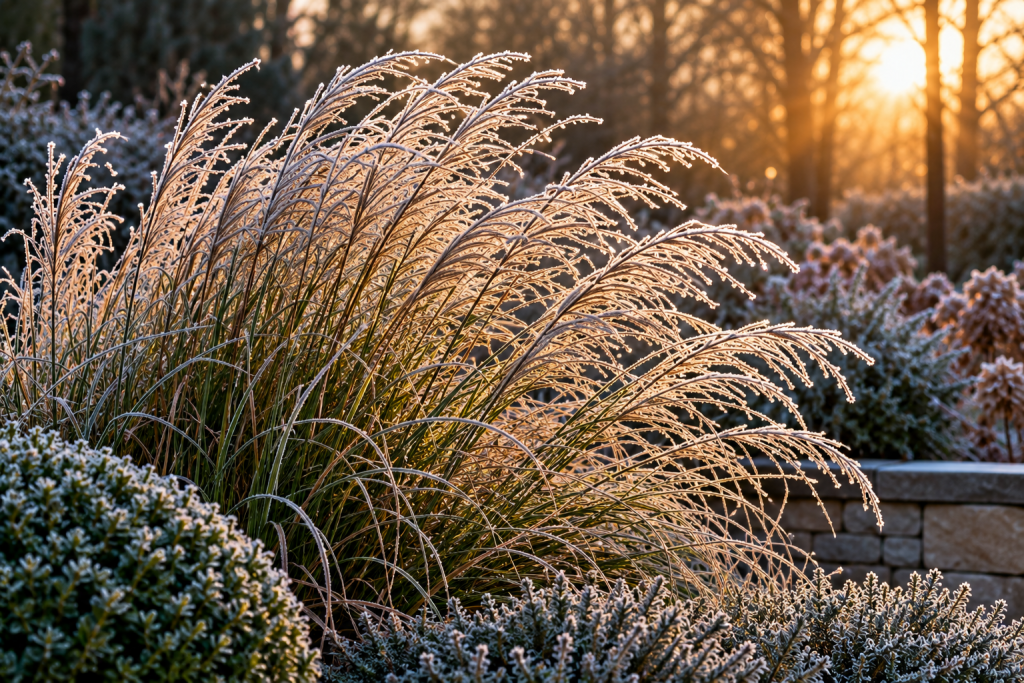
Many ornamental grasses and perennial seed heads are at their most beautiful during winter. Frost settling on grasses, seed heads and dried stems can completely transform a border on a cold morning.
Plants such as Miscanthus, Calamagrostis, Stipa, Echinacea, Sedum/Hylotelephium and Verbena bonariensis can provide height, movement and texture long after their summer flowering season has finished.
Leaving suitable stems standing also provides habitat and food for wildlife.
The big cut-back can wait until late winter or early spring, just before new growth begins.
Use winter stems and bark as part of the planting design
Flowers aren't the only source of winter colour.
Some of the most effective winter gardens use stems and bark deliberately.
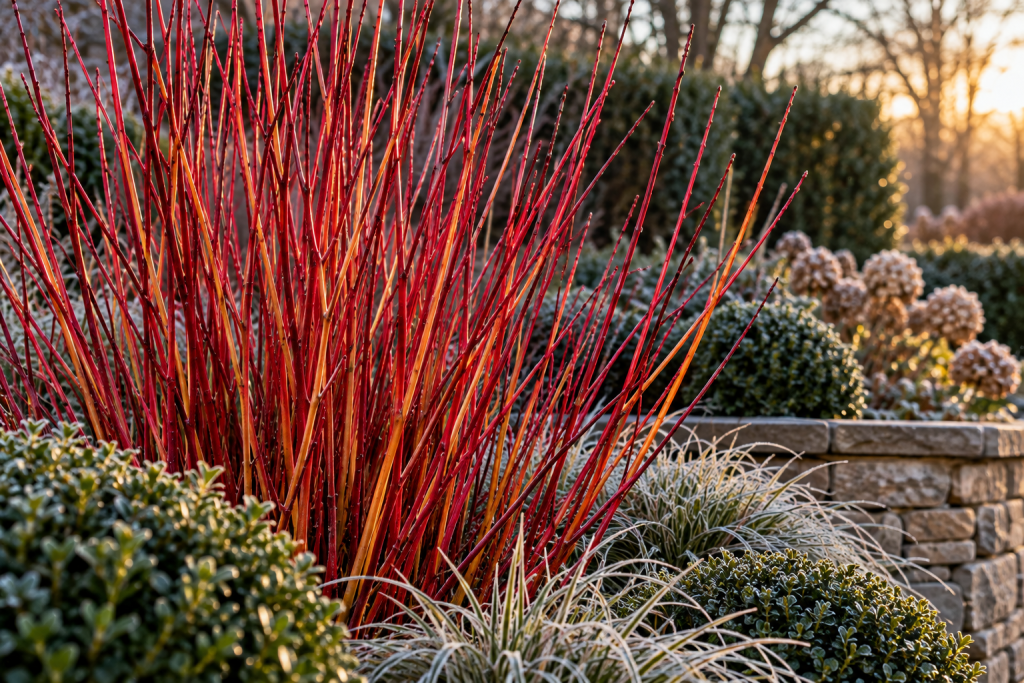
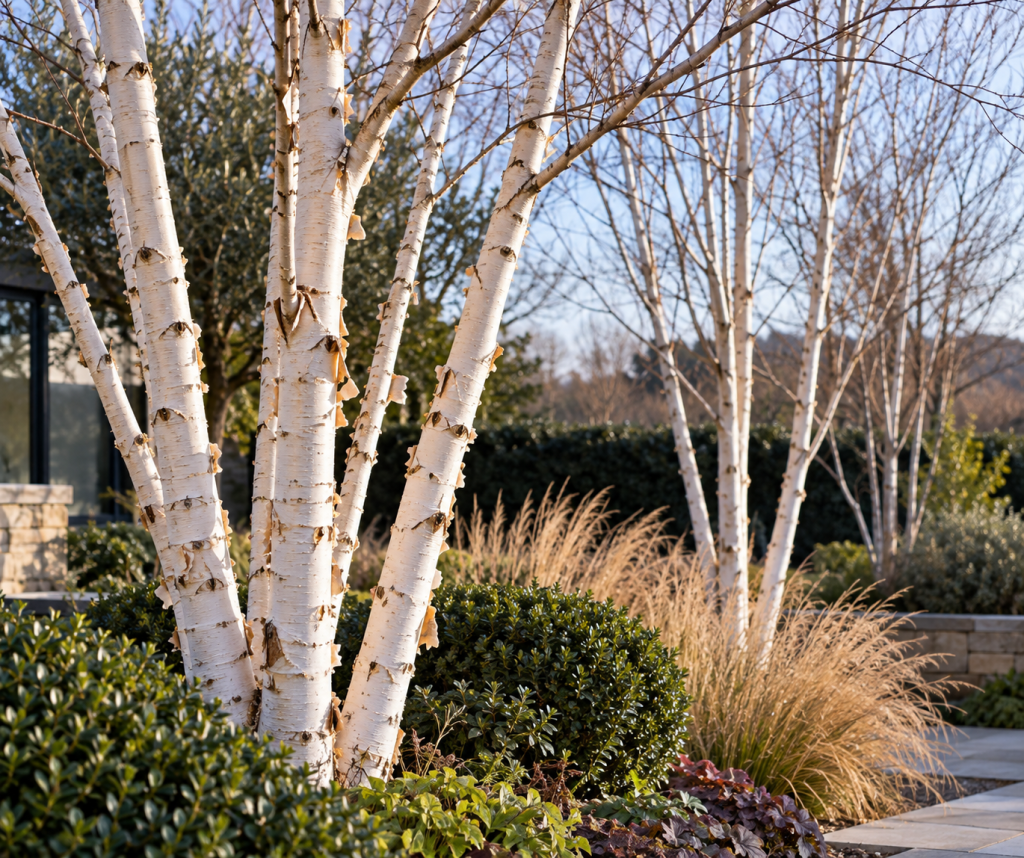
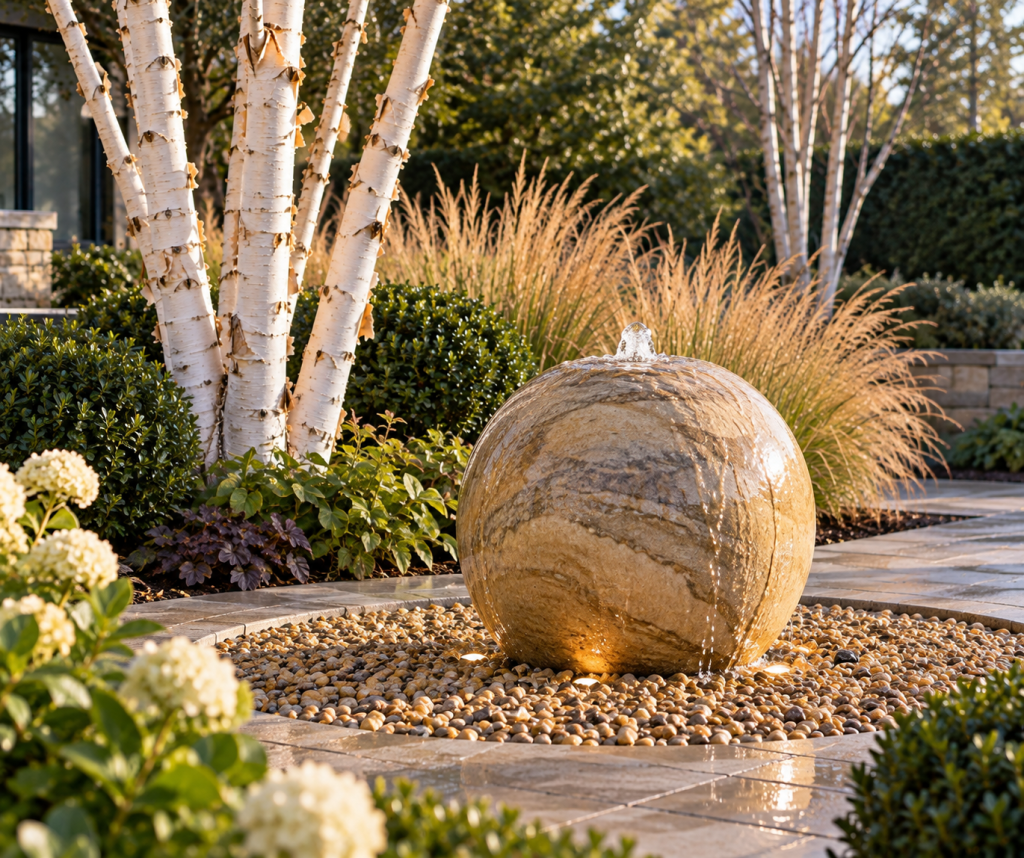
Cornus (dogwood) varieties can produce vivid red, orange or yellow stems once their leaves have fallen. Betula utilis var. jacquemontii provides beautiful white bark, while multi-stem trees can become sculptural features once their branches are exposed.
This is why I often think about what a tree or shrub will look like without its leaves when developing a planting scheme. A specimen plant should earn its place in the garden for more than a few weeks of the year.
Introduce garden lighting
Good lighting can completely change how a garden feels during winter.
In summer we naturally spend more time outside, but during winter we often experience our gardens from inside the house. With darkness arriving early, a completely unlit garden can simply become a black space beyond the windows.
Carefully positioned lighting changes that.
Rather than trying to illuminate everything, I prefer to pick out individual features.
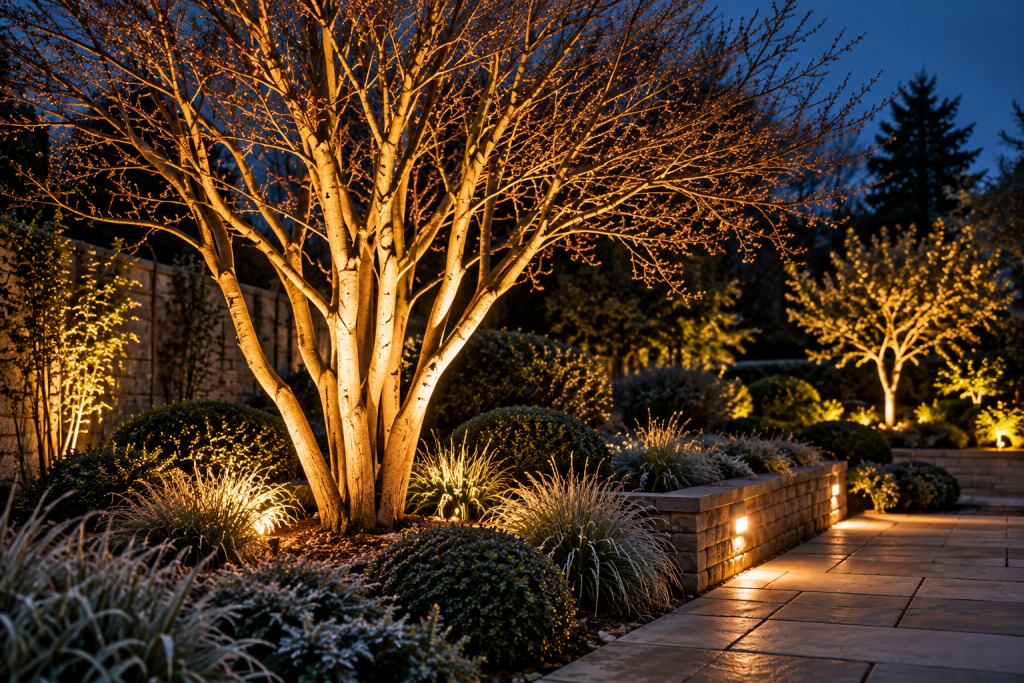
An uplighter beneath a specimen tree can highlight the shape of its trunk and branches. Small lights positioned amongst planting can create pools of light and shadow. Wall lighting can emphasise stonework or textured materials, while subtle lighting around steps and paths combines appearance with practicality.
Lighting can also create depth. Illuminating something towards the far end of the garden draws your eye through the space, making the garden feel larger and ensuring there is still something attractive to look at from the house on a dark December evening.
The key is subtlety. A few carefully positioned warm lights are generally far more effective than flooding the entire garden with light.
Think about the hard landscaping
Winter also reveals the importance of good hard landscaping.
When planting is less dominant, patios, paths, walls, edging, steps, fencing and raised beds become a much larger part of what you see.
Natural stone can be particularly effective at this time of year because variations in colour and texture become part of the winter landscape. Curved paths and borders also continue to provide movement and shape regardless of the season.
This is one of the reasons I believe garden design needs to consider the garden as a whole. Planting and landscaping shouldn't be treated as two separate things — they need to work together.
Add a focal point
Every garden benefits from somewhere for the eye to settle, but this becomes particularly important in winter.
It might be a beautiful multi-stem tree, an evergreen clipped into a strong shape, a large planter, a water feature, a sculpture or even a well-positioned garden seat.
In summer that feature might sit quietly amongst abundant planting. In winter it can become the star of the garden.
Positioning is important too. Think about the views you see most frequently from inside the house — perhaps through the kitchen doors, from the dining table or from a favourite chair. Those winter views deserve just as much consideration as the areas you use when you're outside.
A garden for twelve months of the year
Creating a garden that looks good over winter doesn't mean filling every available space with winter flowers.
It is about balance.
Evergreen structure, interesting bark and stems, grasses, winter flowers, attractive hard landscaping and carefully positioned lighting all contribute something different.
When these elements are considered at the design stage, the garden changes with the seasons rather than simply disappearing at the end of summer.
And for me, that's one of the signs of a really successful garden design.
Tracey-Anne Gardens
Bespoke garden design & landscaping across Clitheroe, Whalley and the Ribble Valley.
07904 322390
info@traceyannegardens.co.uk
traceyannegardens.co.uk